

Industrial estates are set to benefit from clear data center rules requiring large 20MW+ projects to locate in industrial zones, boosting land sales through 2027. The cabinet approved new supervisory policies for data centers utilizing 0.5MW or more, creating an OSS center and screening committee. Investments will be evaluated on Thai employment, supply chain integration, and clean energy usage, with environmental standards categorized into seven power tiers. We maintain overweight sector with tactical call Outperform AMATA and WHA.
Research
Industrial Estate – New rule for data center
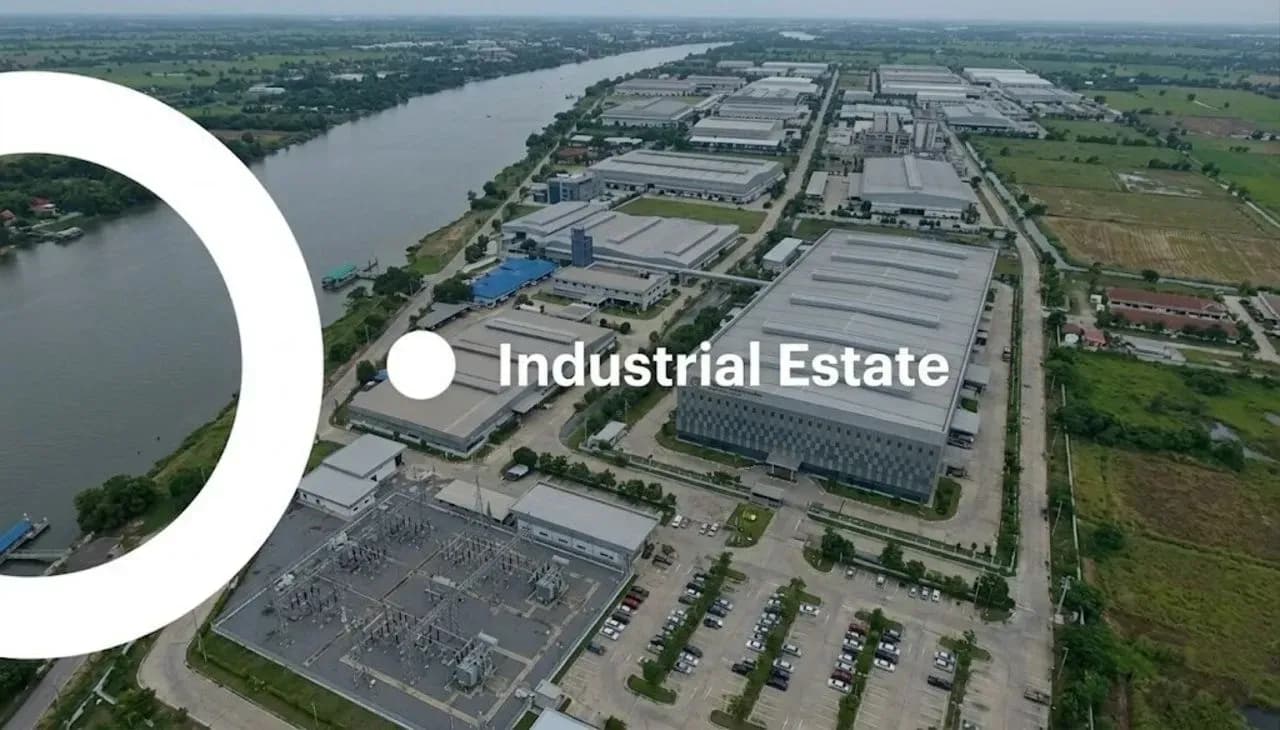
New regulatory framework for the Data Center. On November 10, 2026, the Cabinet approved the data center governance policy, encompassing both regulatory frameworks and approval systems for data center operations in Thailand, targeting facilities with a power capacity of 0.5 megawatts or higher. The Cabinet assigned the Ministry of Digital Economy and Society (MDES) to establish a One Stop Service (OSS) center, alongside a screening committee responsible for overall approval and rule-setting. Objectives: To provide investment certainty for investors who generate national benefits, while ensuring community confidence regarding environmental standards. For general cases, a Code of Practice (CoP) will be used instead of an EIA report, whereas facilities located within industrial estates must comply with the respective industrial estate’s EIA. New investment selection criteria: Evaluations will focus on employment generation, Thai workforce skill development, local income generation, supply chain integration, and clean energy utilization, rather than solely on investment value. Transparency: The MDES will disclose the number and locations of data centers in Thailand via the Dashboard TH-DC.
Data centers are categorized into 7 tiers based on power consumption scale: Ranging from Tier 1 (0–0.5 MW) to Tier 7 (>200 MW). Large-scale projects (Tiers 5–7 or starting from 20 MW and above) are subject to the highest environmental and resource utilization standards and must be located within industrial zone area.
Transition period: Existing projects or those currently under construction are granted a 1-year adjustment period to comply with environmental Code of Practice (CoP) standards, according to BOI there are currently 57 data center projects, with approximately 17 projects already operational. The remaining 40 projects are divided into 20 projects that have obtained construction permits and 20 projects currently in preparation for investment. Meanwhile, new projects lacking permits must immediately comply with the new standards and enter the Pitching process.
Industrial estate sectors are expected to benefit: Following the announcement of clear regulations for data center operations after a delay since last September, we hold a positive view on the sector for two key reasons: Clients awaiting investments in data centers in Thailand will gain clarity and proceed with their investments. Furthermore, since the new regulations mandate that large-scale projects (Tiers 5–7, or 20 MW and above) must be located in industrial area, demand for industrial estate land will receive a boost. We expect land sales for data center projects to begin materializing in the December 2026 and continue into 2027.
Key factors to monitor: In addition to the announced data center regulations, we await clarity on electricity tariffs. Moving forward, the National Energy Policy Council (NEPC) must establish a dedicated electricity rate for data centers to align with and support clean energy utilization, alongside the implementation of a capacity reservation deposit system for data centers.